



Types of Dental Extractions: What to Expect and Why They’re Sometimes Needed
April 21, 2026 9:00 amIt’s usually not the news anyone is hoping to hear. You come in because something doesn’t feel right—a tooth that’s been bothering you, swelling that hasn’t gone down, or maybe a sharp edge that wasn’t there before. After the exam and X-rays, the conversation turns toward removing the tooth. Even when it makes sense, it’s still a moment that gives people pause.
From there, the next question tends to be what kind of extraction is needed and what that actually means. Not all extractions are the same, and understanding the difference can make the process feel more straightforward and easier to approach.
Why a Tooth Might Need to Be Removed
Before getting into the types of extractions, it helps to understand why removal is sometimes recommended in the first place.
In many cases, the goal in dentistry is to save the natural tooth whenever possible. Treatments like fillings or root canals are designed to do exactly that. However, there are situations where a tooth is too damaged or compromised to restore in a predictable way.
This can happen when decay has progressed too far, when a tooth is severely cracked, or when infection has affected the surrounding bone. In other cases, crowding or orthodontic concerns may make extraction part of a larger treatment plan. Whatever the reason, the focus is on protecting your overall oral health rather than just addressing one tooth in isolation.
Simple Extractions: When the Tooth Is Fully Visible
A simple extraction is typically recommended when the tooth is fully visible above the gumline and can be accessed without needing to remove surrounding tissue.
In this type of procedure, the tooth is gently loosened and lifted out using specialized instruments. Because the structure of the tooth is intact and accessible, the process is usually more straightforward than other types of extractions.
Even so, “simple” doesn’t mean rushed or uncomfortable. Local anesthesia is used to keep the area numb, and the goal is to remove the tooth in a controlled and careful way. For many patients, this type of extraction feels more manageable than they initially expected.
Surgical Extractions: When More Access Is Needed
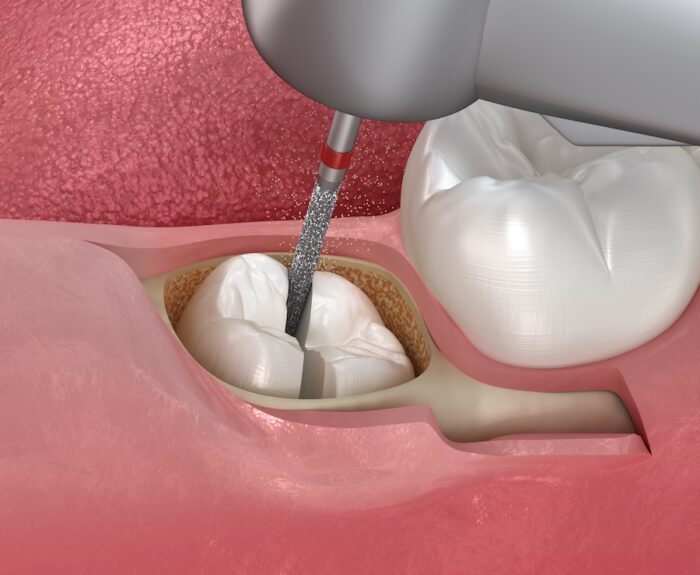 Surgical extractions are used when a tooth isn’t as easy to reach. This may be the case if the tooth hasn’t fully erupted, has broken at the gumline, or is positioned in a way that limits direct access. In these situations, a small opening is made in the gum tissue to reach the tooth more effectively.
Sometimes the tooth is sectioned into smaller pieces to allow for a more controlled removal, especially if it’s impacted or anchored more firmly in the bone. While this sounds more involved, the approach is designed to minimize stress on the surrounding tissue and make the process as smooth as possible.
Because of the additional steps, surgical extractions may involve a slightly longer recovery period, but they are a common and well-managed part of dental care.
Wisdom Tooth Extractions: A Common Type of Surgical Removal
Wisdom teeth often fall into the category of surgical extractions, although each case can vary.
These teeth may not have enough space to come in properly, which can lead to crowding, discomfort, or difficulty cleaning the area. In some cases, they remain partially or fully impacted beneath the gums.
When removal is recommended, the approach depends on how the tooth is positioned. Some wisdom teeth can be removed more simply, while others require a surgical approach similar to what was described earlier.
Because wisdom teeth are located toward the back of the mouth, the focus is on removing them carefully while protecting nearby structures.
What Recovery Looks Like After an Extraction
Regardless of the type of extraction, healing is an important part of the process.
After the tooth is removed, your body begins forming a clot in that space, which is a key part of healing. You’ll be given instructions on how to protect that area, including what to eat, how to clean around it, and what to avoid during the first few days.
Some soreness and swelling are normal, especially with surgical extractions, but these symptoms tend to improve as the area heals. Following post-operative instructions helps reduce the risk of complications and supports a smoother recovery.
What Happens After the Tooth Is Removed
Once the extraction site has healed, the next step is deciding how to replace the missing tooth, if needed.
Depending on the location and your overall oral health, options like dental implants, bridges, or partial dentures may be discussed. Replacing the tooth helps maintain balance in your bite and prevents nearby teeth from shifting over time.
Not every extraction requires replacement right away, but it’s an important part of the long-term conversation.
Dental Extractions in Broken Arrow, OK at Lynn Lane Family Dentistry
At Lynn Lane Family Dentistry in Broken Arrow, OK, Dr. Valerie Holleman takes a thoughtful approach when an extraction is recommended, making sure patients understand both why it’s needed and what to expect during the process.
If you’ve been told a tooth may need to be removed or you’re dealing with ongoing discomfort, it’s worth having a conversation about your options. A comprehensive dental exam can help determine the best next step and guide you toward a solution that supports your overall oral health.
Contact UsCategorised in: Tooth Extraction